
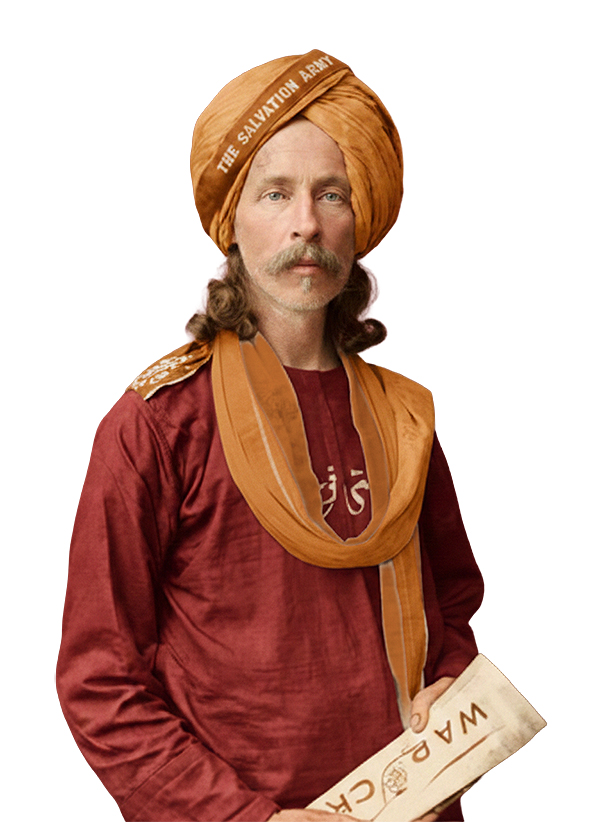
Frederick St George de Lautour (Booth) Tucker
Born 21 March 1853, Monghyr, India
Son of William Thornhill Tucker, a deputy commissioner in the Indian Civil Service. He was educated at Cheltenham College and, in 1875, was converted during the Moody and Sankey campaigns in London.
He served in the Indian Civil Service, but while on leave in England in 1881, he joined The Salvation Army and later worked in the legal department at International Headquarters. In 1882, he led a group of pioneer officers to India, where he became known as ‘Fakir Singh’. His first wife, Louisa Mary, died in Bombay in February 1887. He married Emma Booth in 1888 and adopted the name Booth‑Tucker. They served in India until 1891, when they were appointed to London as Commissioners for Foreign Affairs.
Subsequently, he was Territorial Commander in the United States (1896–1904), where Emma died in 1903; Foreign Secretary in London (1904–07); Special Commissioner for India and Ceylon (1907–19); and travelling Commissioner until his retirement in 1924.
In 1906, he married Colonel Minnie Reid, daughter of a one‑time Acting Governor of Bombay, and they served together in India.
The Viceroy and Governor General awarded him the Kaiser‑I‑Hind Medal (First Class) “For Public Service in India”.
He wrote several poems and songs and compiled One Hundred Favourite Songs of The Salvation Army (1899). He was the first editor of The Officer magazine in 1893, and authored several books, including Life of Catherine Booth (1892), The Consul (1903), and Muktifauj (1923). Booth‑Tucker is best known for his work on the rehabilitation of criminal tribes in India.
He was admitted to the Order of the Founder in 1920, promoted to Glory on 17 July 1929 from Stoke Newington, London, and buried at Abney Park Cemetery.
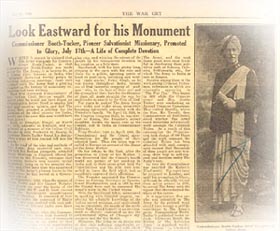
“Look Eastward for his Monument” — Tribute in The War Cry, 27 July 1929
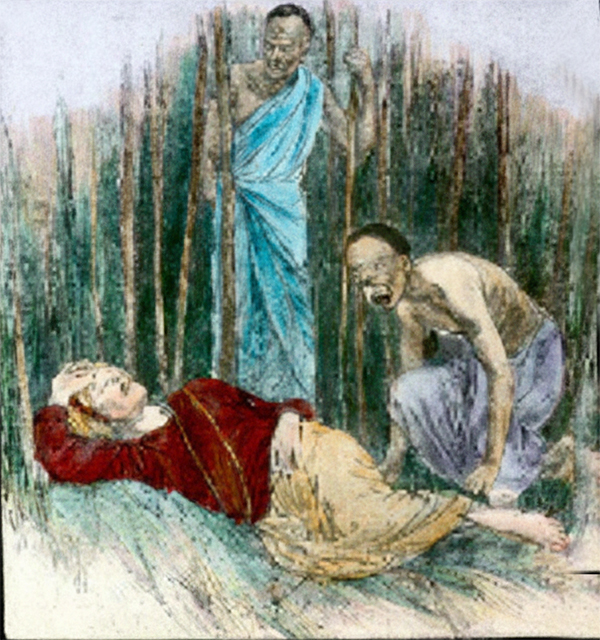
*He is remembered as one who identified himself with the Indian way of life and dress.


