
Emma Booth‑Tucker (1860–1903)
A visionary leader, global changemaker, and fearless advocate for the marginalised
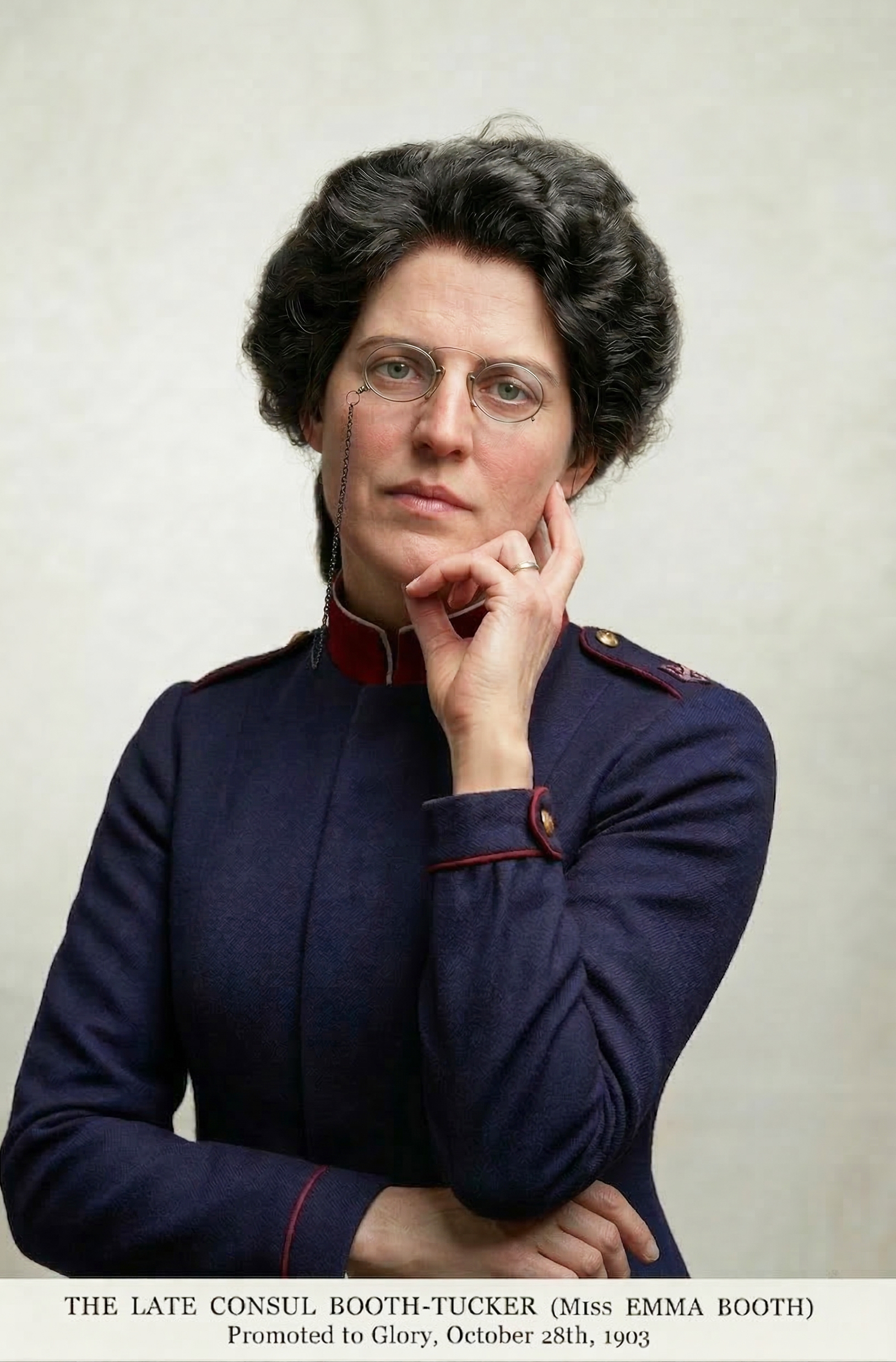
At just 20 years old, Emma became the principal of the first Salvation Army training school for women — a groundbreaking achievement that redefined what women could lead, build, and influence.
In 1888, she married Major Frederick Tucker, a pioneer of social and spiritual work in India. Following Booth family tradition, he added her surname to his own, becoming Booth‑Tucker. Together, they raised nine children and shaped a legacy that continues to inspire.
Their mission carried them across India, London, and eventually the United States, where Emma’s clarity, authenticity, and fearless leadership helped restore public trust and energise the movement. Her father later honoured her with the title “The Consul.”
Her Work Focused On
- Prison outreach and reform
- Supporting underserved communities
- Developing “farm colonies” — early social innovation for new beginnings
In 1903, during one of her missions, Emma tragically lost her life in a train accident at age 43. Her funeral at Carnegie Music Hall drew thousands — a powerful testament to the lives she touched. She now rests in Kensico Cemetery, New York.
Her mission lived on through her younger sister, Evangeline Booth, who carried forward Emma’s bold vision with the same fire and conviction.


