
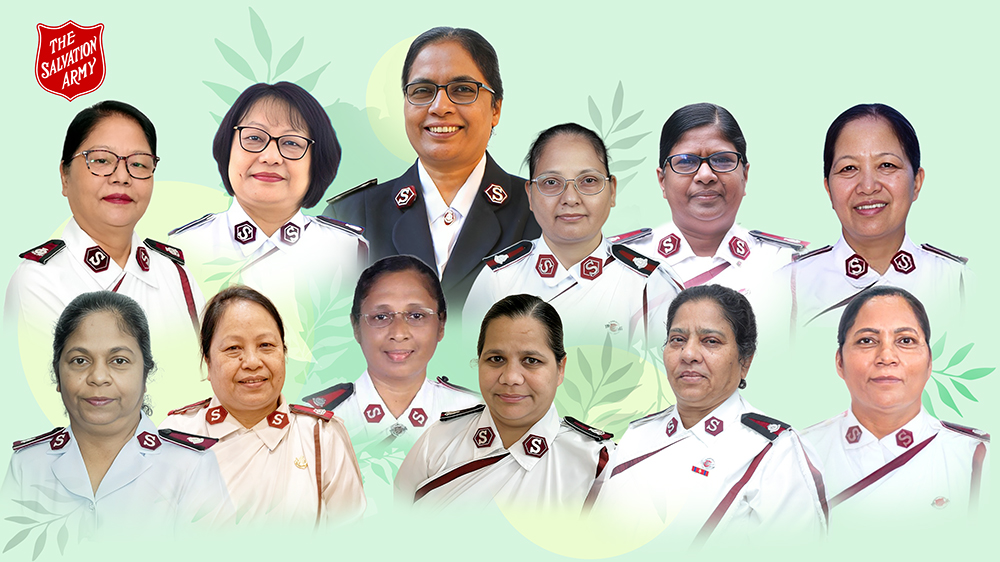
Celebrating the Strength, Leadership & Legacy of Women in The Salvation Army
“I insist on the equality of women with men...”
— William Booth, Messages to Soldiers (1908), affirming the global commitment to gender equality.
As The Salvation Army grew, women were immediately entrusted with vital leadership roles. Some opened entirely new corps, while others pioneered critical social work among vulnerable women. Emma Booth trained women cadets, and by 1878, the number of women officers (41) nearly matched that of men (49).
In India, leaders soon recognised the compelling need to train Indian women for ministry. Many contemporary voices believed this to be impossible—culturally, socially, and traditionally. Yet, courage prevailed. Captain Clara Case was appointed to establish a women’s training college in Madras. In 1890, twelve pioneering women began their rigorous training under her visionary leadership.
These early cadets studied, prayed, visited homes, and held open‑air meetings. Some were even imprisoned for playing tambourines in public spaces. Undeterred, they persevered and were triumphantly commissioned as officers. What once seemed impossible became an unstoppable movement that has since inspired thousands of women across India.
Nurani later appealed beautifully for more women candidates, saying: “You may be just an unpolished and simple girl, but in the hands of God, you will become a saviour...”
Today, women continue to be trained as capable officers across India. Many serve alongside their husbands, seamlessly sharing ministry, leadership, and systemic responsibility. A woman’s dedication is vital, and her partner's holistic support—spiritually, emotionally, and domestically—is equally prioritized.
Single women officers and widows also hold highly significant organizational appointments, proving definitively that leadership is defined by strength, wisdom, and grace. Their contributions remain absolutely essential to the living mission of The Salvation Army.


