Indian Salvationists are proud to be citizens of India

Background
The Indus Valley civilization, one of the oldest in the world, goes back at least 5,000 years. Aryan tribes from the northwest invaded about 1500 B.C.; their merger with the earlier inhabitants created classical Indian culture. Arab incursions starting in the 8th century and Turkish in the 12th were followed by European traders beginning in the late 15th century. By the 19th century, Britain had assumed political control of virtually all Indian lands.
Non-violent resistance to British colonialism under Mohandas Karamchand Gandhi (Mahatma Gandhi) and Jawaharlal Nehru led to independence in 1947. The subcontinent was divided into the secular state of India and the smaller Muslim state of Pakistan. Fundamental concerns in India include the ongoing dispute with Pakistan over Kashmir, massive overpopulation, environmental degradation, extensive poverty, and ethnic strife, despite impressive gains in economic investment and output.
Location
India, officially the Republic of India, is a country in South Asia. It is the second-most populous country, the seventh-largest by area, and the most populous democracy in the world. Bounded by the Indian Ocean on the south, the Arabian Sea on the southwest, and the Bay of Bengal on the southeast, it shares land borders with Pakistan, China, Nepal, Bhutan, Bangladesh, and Myanmar.

Climate: varies from Tropical Monsoon in the South to Temperate in the North.

Population: 1,425,775,850 (end of April 2023)
Birth rate: 16.750 births per 1000 people (2024)
Sex Ratio
Total: 1.079 male(s)/female (2020)
At birth: 1.11 male(s)/female (2020)
Under 15: 1.13 male(s)/female (2020)
15–64 years: 1.06 male(s)/female (2009 est.)
65 and over: 0.89 male(s)/female (2020)
Total Population: 1,380,000,000+ (2020)
Religions
Hindu: 79.8%, Muslim: 14.2%, Christian: 2.3%, Sikh: 1.7%, Buddhist: 0.7%, Jains: 0.4%, Others: 0.9%
(Source: Religion Census India 2001)
Indian Languages

English has associate status but is the most important language for national, political, and commercial communication. Hindi is the national language and the primary tongue of 30% of the people. Other official languages include Bengali, Telugu, Marathi, Tamil, Urdu, Gujarati, Malayalam, Kannada, Oriya, Punjabi, Assamese, Kashmiri, Sindhi, Sanskrit, and Hindustani.
Literacy
Definition: age 15 and over can read and write
Total population: 64.08%
Male: 75.3%
Female: 53.7% (Census 2001)
Country Information
Country name: Republic of India
Government type: Federal Republic
Capital: New Delhi
Independence: 15 August 1947 (from UK)
Constitution: 26 January 1950
Legal system: based on English common law; limited judicial review of legislative acts; accepts compulsory ICJ jurisdiction with reservations.
Flag Description

Three equal horizontal bands of Saffron (top), White (middle), and India Green (bottom) with a Navy Blue Chakra (24-spoked wheel) centered in the White band. Adopted on 22 July 1947.
Economy – Overview
India’s economy encompasses traditional village farming, modern agriculture, handicrafts, modern industries, and a wide range of services. More than a third of the population cannot afford an adequate diet. Despite challenges, India maintains strong foreign exchange reserves and a growing software export sector.
Regional Differences
India celebrates numerous festivals each year, many religious in nature. Republic Day on January 26th features a grand parade in New Delhi showcasing India’s cultural diversity. Indian celebrations are colourful, vibrant, and expressive, reflecting the country’s vast landscapes, monsoons, and cultural richness.
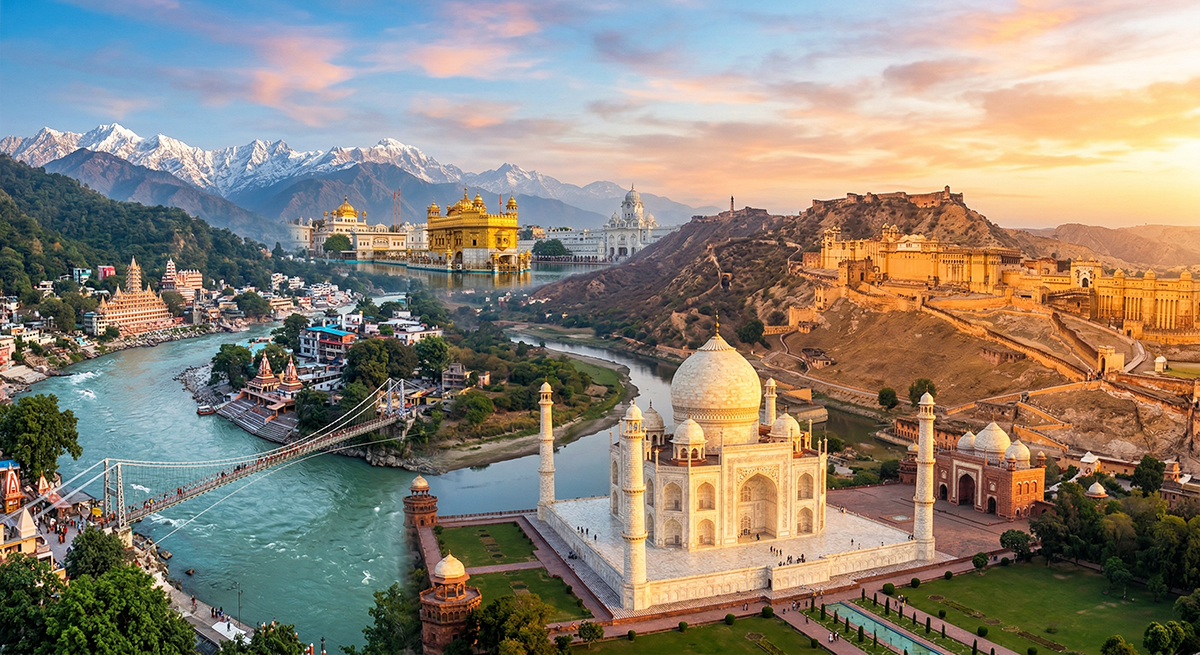
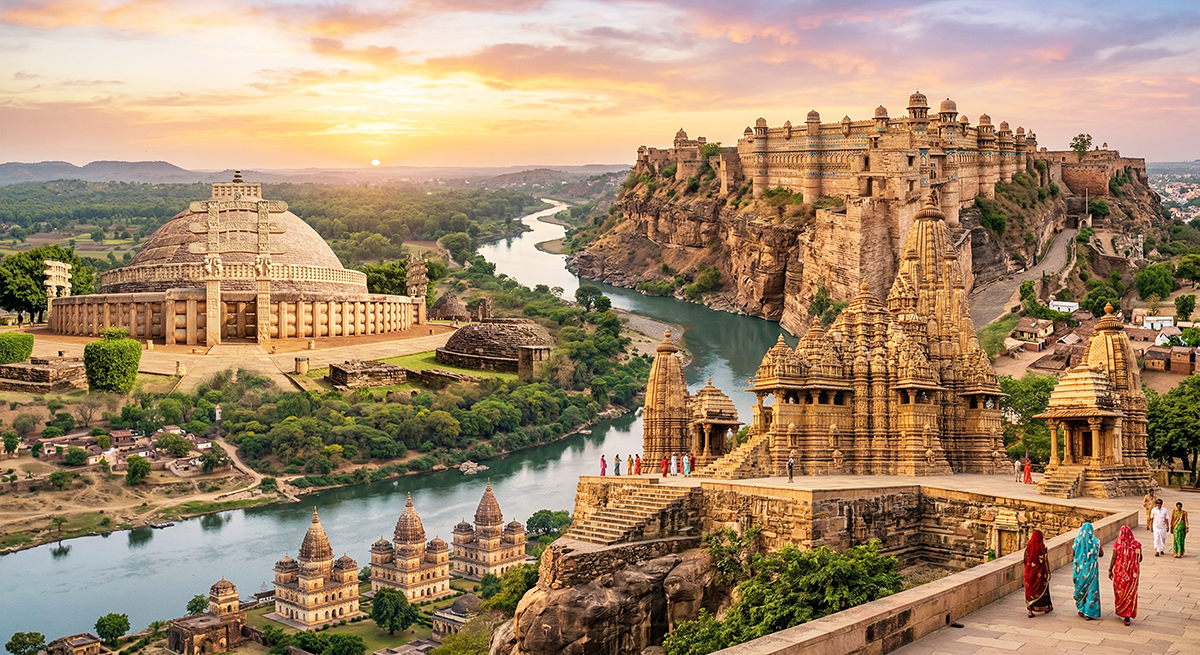
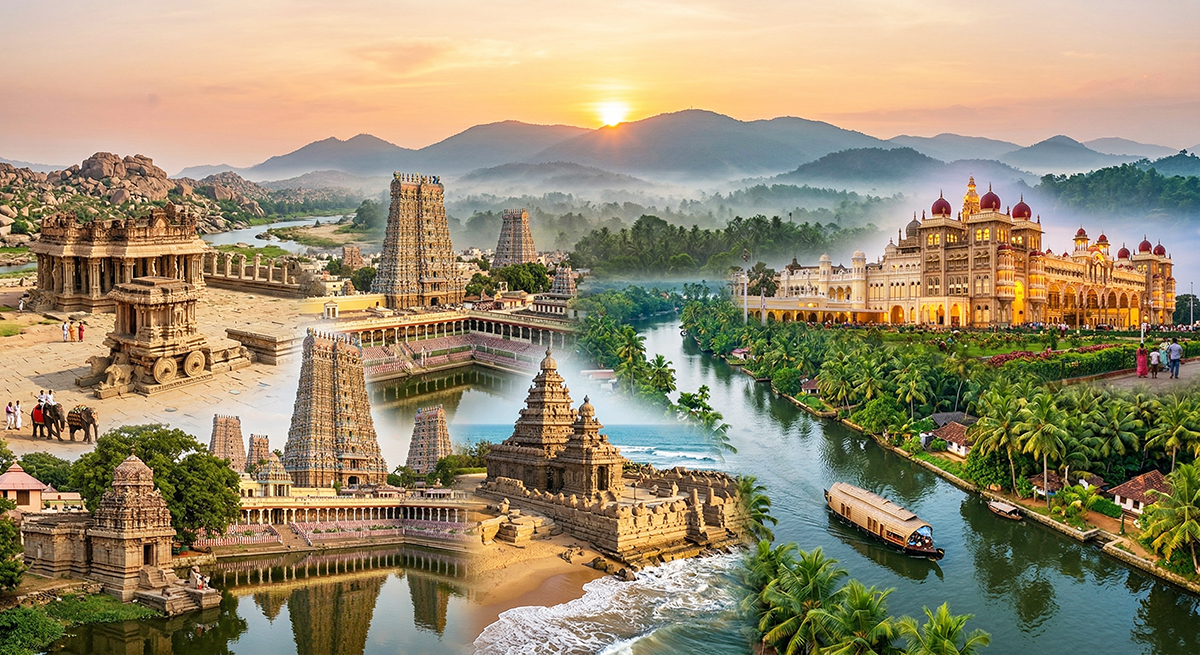
The Taj Mahal in Agra, Goa’s churches, and India’s ancient temples represent the nation’s architectural and artistic heritage. India is also home to eight classical dance forms and a rich musical tradition influenced by Persian and Arab cultures.
The caste system, though evolving, continues to influence social structure. It has historically provided order and identity within Indian society.